

Partnership Working – A Call to Arms!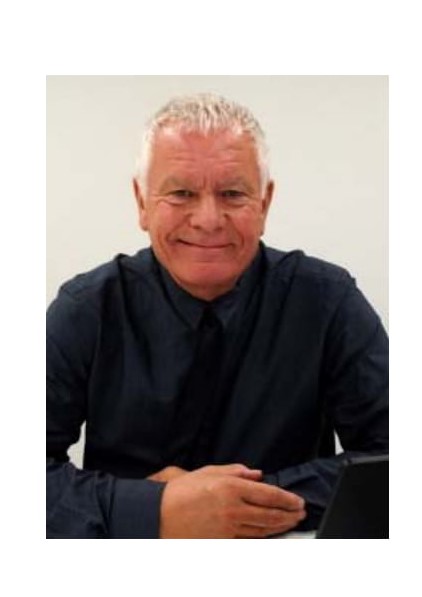
This is my first blog as the Independent Chair and Scrutineer of the Pan-Dorset Safeguarding Children Partnership (PDSCP). My brief is to support a clearer direction for the Partnership and to strengthen multi-agency working. In fact, partnership working pan-Dorset has become much more focussed and resilient as a result of responding to the Covid-19 crisis.
We now need your help. The Partnership has adopted a new approach to inclusion so that the everyday army of safeguarders across Dorset can feel as included as possible in how safeguarding services operate and develop.
Good safeguarding benefits from community curiosity as well as professional curiosity. We also want to identify any difficulties early and deal with them, hence my request that you let us know of any problems you would like help in solving and any issues you feel need a wider airing. To do that, just contact us in the following ways:
|
Pan-Dorset SCP East: Tel: 01202 458873 |
Pan-Dorset SCP West: Tel: 01305 221196 |
We are holding our first Open Forum lead by myself on the 17th of Junefrom 11.00am to 12.00pm via Skype.If you would like to take part (places are limited), please contact the Business Team on the email below to register your interest and be sent the skype link to join.pandorsetsafeguardingchildrenpartnership@bcpcouncil.gov.uk |
Multi-agency safeguarding is a 24/7 emergency service. Despite the strong local performance in responding to the Covid-19 crisis, we know that abuse and neglect have not gone away
- Referrals are down primarily because those who would normally refer are locked down or those they would refer are locked down. My concern is that children and young people at risk who were sometimes ‘hidden in plain sight, are now hidden out of sight as well.
- Domestic abuse referrals are rising.
- Mental health charities and indeed agencies like the National Youth Agency report very large numbers of children and young people self-reporting mental health problems such as a loss of meaning and purpose about their lives and suicidal ideation.
- Anxiety levels are high for many, in the general population as well. Disorientation about the situation and where we are going is commonplace, including a greater caution about strangers and a bewilderingly empty public space. We may be experiencing an epidemic of anxiety as well as a virus pandemic.
Looking forward…
As we move out of lockdown slowly, we enter a ‘new normal’ for safeguarding. You could think of it as ‘blended safeguarding, combining the best pre-lockdown interventions and incorporating some new ways of working, which have developed rapidly in the last few weeks.
For example, the use of online platforms has accelerated. Globally, there were 11 million Zoom users before March. Now there are 455 million users and Zooms security level has improved to meet understandable concerns it was not secure enough for sensitive communication. It remains the platform of choice for vulnerable people, as it is free. For children and parents, if online reviews and conferences are held on platforms like Microsoft Teams, they will often have to go into a school to be able to access the meeting rather than being able to do it for free on their phone. Some local safeguarding systems are loaning IT equipment to children and their parent/s, so they can participate fully in their own case as the professional team around them moves to online remote working. I welcome that.
The ‘new normal’ brings with it other changes to safeguarding practice. Social or physical distancing is a challenge. Much relationship-based and conversation-based practice with children and families will still need to be face to face, although we must learn from some young people who are clearly saying they prefer online communication and speak longer and in more depth on the phone than they do when face to face.
If you are trying to effect major changes in behaviour, being alongside someone usually matters. It may be this can be achieved remotely and of course this may just take time, practice and familiarity for all concerned. But for now, if you are a teacher in Reception or Year 1, some children will need comforting, others will demand attention so professionals will have to live with some risk in order to do their job.
In truth, safeguarding work already comes with built-in risks. It is demanding ‘emotional labour, so it remains important with physical distancing to take every possible precaution but to recognise that it will not always be possible to avoid proximity and close contact.
Another key change is the rise in helplines, the implication of which is to establish much stronger permanent duty systems in all agencies, so that the response on the day and in the immediate period afterwards is well resourced. A greater percentage of time will need to go into high impact short-term work and to roll out the best practice in some local teams to all local teams.
I am sure that towards the end of the calendar year, when a degree of normality has hopefully returned, we will find the overall number and level of referrals in November and December 2020 will be at the same levels as they were in the corresponding months in 2019. We will all have to work hard to catch up with the months of support that have been missing for those people not in touch with services. Those who are already in touch, I am confident are being served well with no new major delays or gaps, at least that have been brought to my attention.
Having said all that, safeguarding principles and practice have built up over more than 50 years, with the knowledge base becoming continuously more evidence-based. That will not go away, nor should it go away, just as abuse and neglect have not gone away. Our message has to be…..
STAY ALERT |
REPORT ABUSE AND NEGLECT |
SAVE LIVES |
